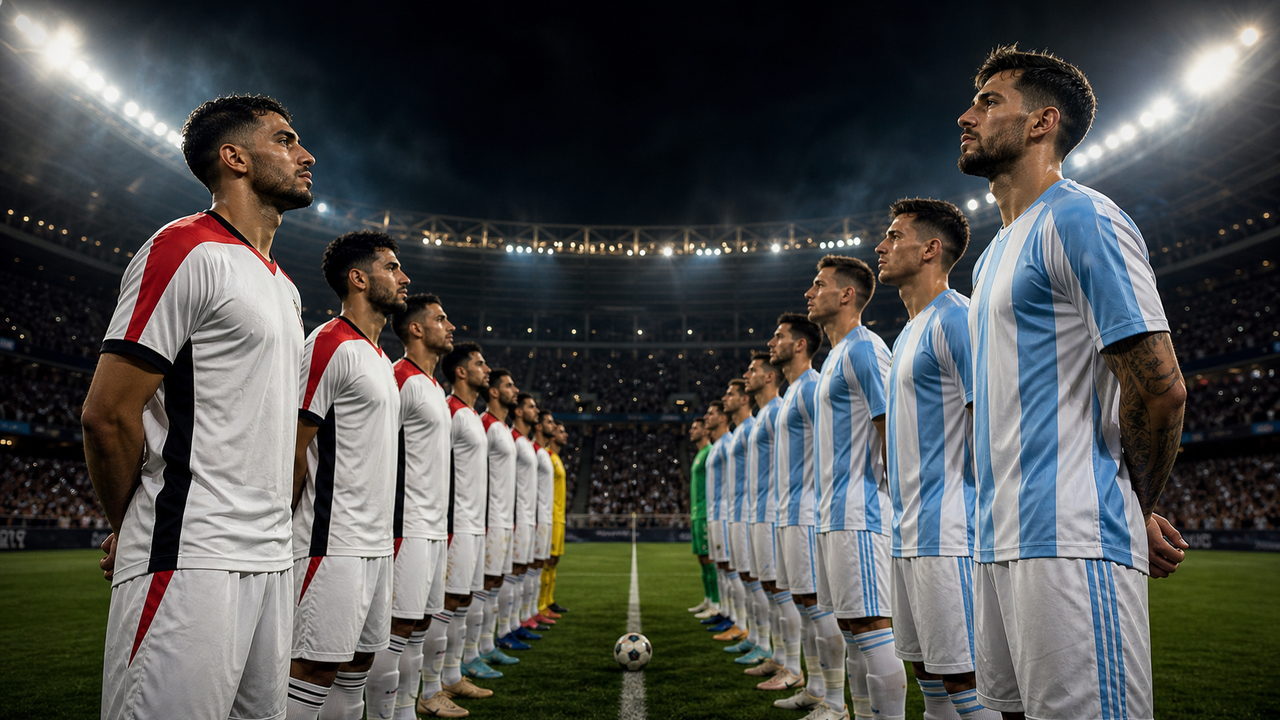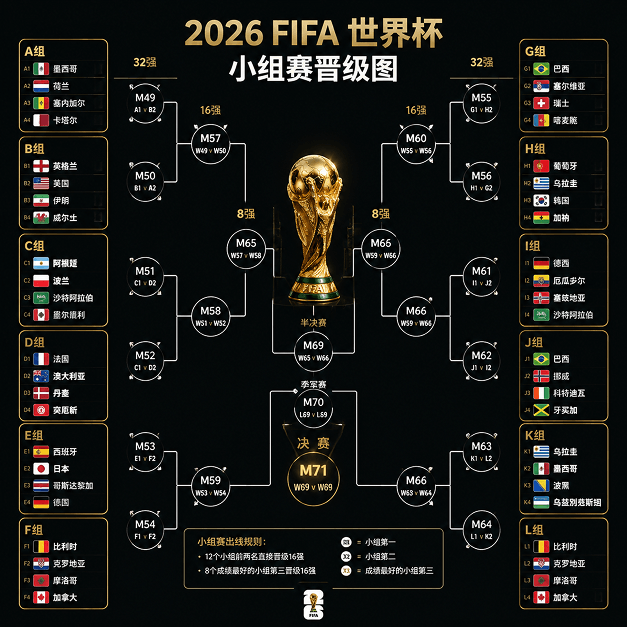
The FIFA World Cup is rarely completely detached from politics, but it has never before required to walk a tightrope over such complex geopolitical issues. One of the host countries is at war with a participating country whose team even has to commute from another country to the match.
Furthermore, there's a rather striking coincidence—the three host countries of the 2026 World Cup—the United States, Canada, and Mexico—are currently embroiled in a fierce trade war. In fact, between the opening ceremony of the Aztec Stadium and the final match at Metropolitan Life Stadium in New Jersey, the three countries will renegotiate the North American Free Trade Agreement (USMCA).
U.S. President Donald Trump is extremely focused on this tournament, its sponsors, and his influence since returning to the White House last year. He has even joked that his defeat to Joe Biden in the 2020 election actually had one advantage—allowing him to govern during this World Cup and the 2028 Los Angeles Olympics.
Amid renewed conflict between Tehran and Tel Aviv, Trump had made a fairly direct call for a halt to the attacks. With the World Cup opening ceremony approaching on Thursday evening (June 11), he appeared to cancel new airstrikes and hinted that an agreement to end the war might be near. However, earlier that day, he had vowed to launch a "very tough strike" against Iran. This is typical of Trump; changes of heart always happen quickly.
Even before altering the course of the war with Iran, which caused a global energy and economic upheaval, he controversially accepted the FIFA Peace Prize. There's even a possibility that the US and Iran could face off in the knockout stages, coinciding with the weekend of the US 250th anniversary of its independence. When football is more than just football; it's a multi-billion dollar business, you'll find that many seemingly "illogical" things about this World Cup can actually be explained by economics.
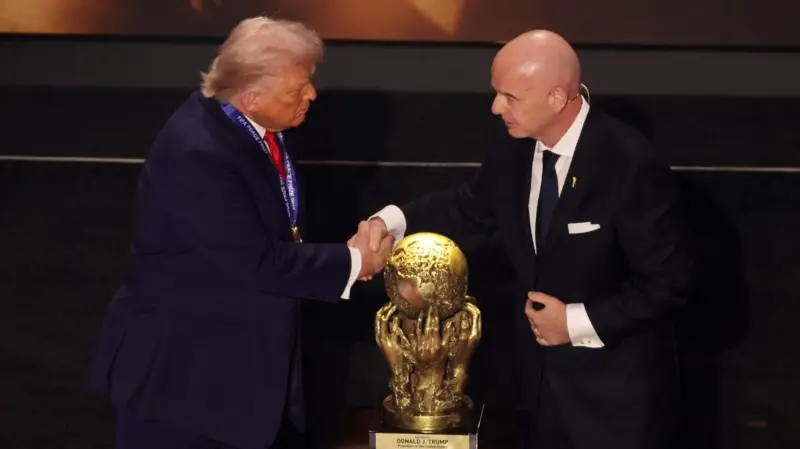
Before the start of the 2026 World Cup, FIFA awarded US President Trump a Peace Prize.
Click below to view the complete pre-match analysis from OpenScore.
FIFA President Gianni Infantino has called for a ceasefire during the World Cup. If the World Cup helps to accelerate cooling down the conflict, it could have a substantial impact on energy prices, supply, and the global economy.
Can the World Cup truly influence major global economic conflicts? Nobody knows. But one thing is certain: another economic piece of the puzzle is unfolding before football fans worldwide. This is not only a comprehensive reshaping of the football economy, but also a vivid case study of how the world's major economies operate today.
"Without fans, football is nothing," the late Scottish World Cup legend Jock Stein once said. But at this year's biggest global event, some fans may have to pay unprecedented prices to see a potentially insignificant match; meanwhile, commuter train fares to the stadiums are approaching ticket prices. Consider New Jersey Transit Authority train tickets—normally $12.90 round trip—but reaching $100 during the tournament. Fans are being "harvested" to an unprecedented degree because this year's economic model is drastically different from the past. First, the fact that most matches are held in borrowed American football stadiums (about a quarter of the matches are in Canada and Mexico) likely gives it a distinctly American sporting character. This tournament has transformed the "beautiful sport" into a "monetized sport," benefiting FIFA. Economically, this may be the most influential World Cup ever, but not due to increased economic activity in the host country or a consumer boom driven by strong team performances.
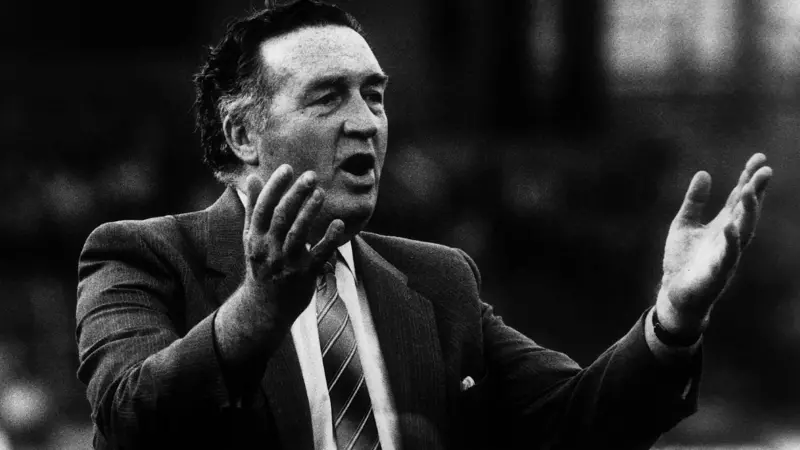
Former Scotland national team coach Jock Stein famously said, "Without fans, football is nothing."
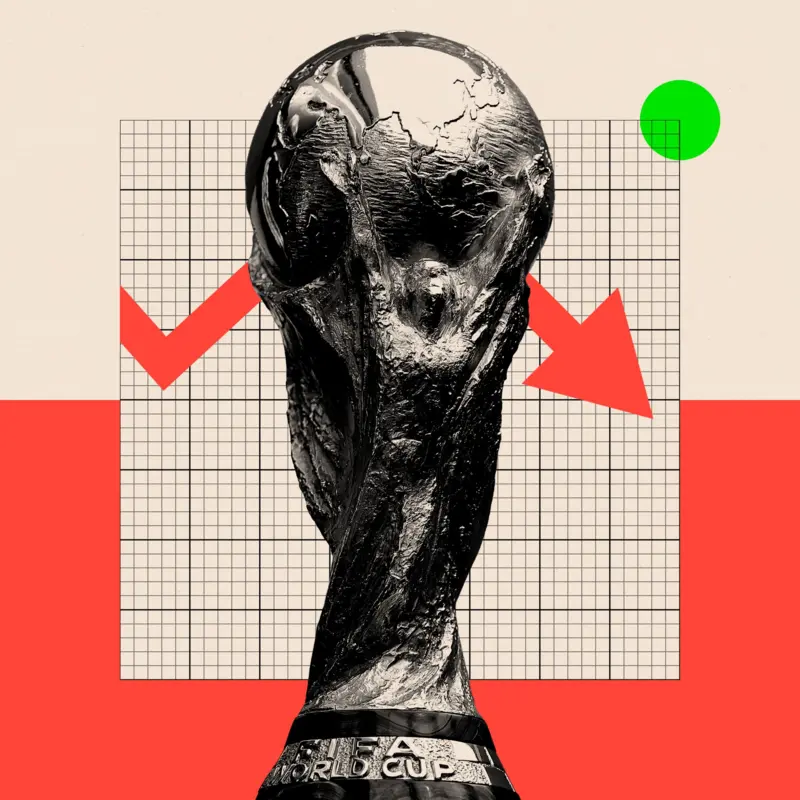
Instead, it's more like a case of a "K-shaped economy" in a developed economy—different groups experience drastically different economic outcomes—which, when plotted on a chart, would be one line sloping upwards and the other downwards, like the letter "K".
This economic model stems from an attempt to change the pricing mechanism. It clearly prioritizes a certain group of fans—the demographic positioned on the upward slope. However, it's worth noting that FIFA holds a different view, emphasizing that the substantial ticket revenue will be distributed in a Robin Hood-like manner to promote football development in the poorest countries.
The biggest tournament ever, yet many can't afford tickets. This year's event is incredibly massive. The stadiums are the largest, and the number of matches has increased dramatically. The number of participating teams has expanded from 32 to 48, and the global television audience is likely to reach a record high. The tournament spans from Vancouver to Mexico City, making it the most extensive event ever. The winning team might even need to travel a distance equivalent to the diameter of the Earth.
Then there's the price. Compared to the cost of watching any other high-level football tournament, tickets for this event were astronomical. Final tickets reached five figures in US dollars, while tickets for more attractive group stage matches were around $1,000; even the "cheaper" non-highlight matches cost several hundred dollars.
This is an economic goldmine.
It is also the largest-scale experiment to change the pricing mechanism for such large-scale events. Dynamic pricing, which raises prices based on demand, has been used in the past for concerts and some sporting events, but never for an event of this scale.
The US calls this sport "soccer," but it's clearly operating under the economic model of "American football." In the NFL, seat pricing prioritizes revenue management—maximizing revenue is more important than filling all seats. American sports are priced for the luxury and high-end market, to the point that stadium capacity has actually decreased, with billions of dollars spent on creating premium boxes and VIP lounges in the original seating area.
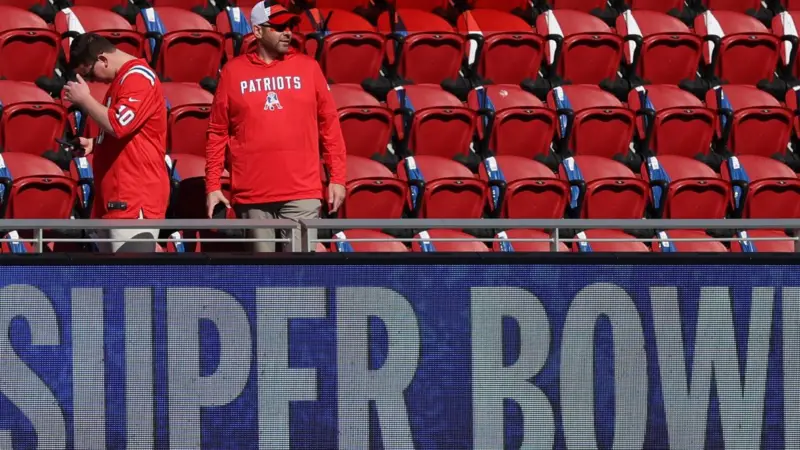
NFL stadiums employ a dynamic pricing mechanism aimed at maximizing revenue rather than simply aiming for full attendance. The supply of these experiences is limited by the length of the season—each NFL team only has nine home games, making each game more valuable.
Dynamic pricing allows teams to further extract revenue, especially given the relatively even distribution of the NFL's massive television revenue. Since all 11 venues for this World Cup in the United States are NFL stadiums, American sports are effectively exerting influence on another sport.
This is quite different from previous tournaments. In the past, a major reason for hosting the World Cup was to promote infrastructure development, such as transportation and the construction and renovation of stadiums.
The focus for 2026 will be on "asset-light" projects to avoid "white elephant projects" like the Miyagi Stadium in Japan, the Green Point Stadium in Cape Town, South Africa, or the $300 million stadium in Manaus, Amazon. In the past, these costs were often borne by taxpayers, and countries viewed them as investments in national branding, but these stadiums were difficult to maintain after major tournaments.
2026 will largely overturn this model, with only Mexico as a slight exception. FIFA will lease stadiums primarily built with American football funding and aggressively increase revenue using American-style pricing. Unlike in the past when taxpayers borne the construction costs, this time the costs will be borne by the audience, while revenue will soar due to more matches, larger stadiums, and higher ticket prices.
The exact amount of ticket and hospitality revenue remains unclear. Initial estimates suggested it would increase from $929 million for the 2022 Qatar World Cup to over $3 billion. Richard Sheehan, a professor of economics and sports finance at the University of Notre Dame, believes total revenue this year could exceed $7 billion, a sevenfold increase. He estimates that per-match ticket revenue will increase from $15 million to $71 million, nearly a fivefold increase.
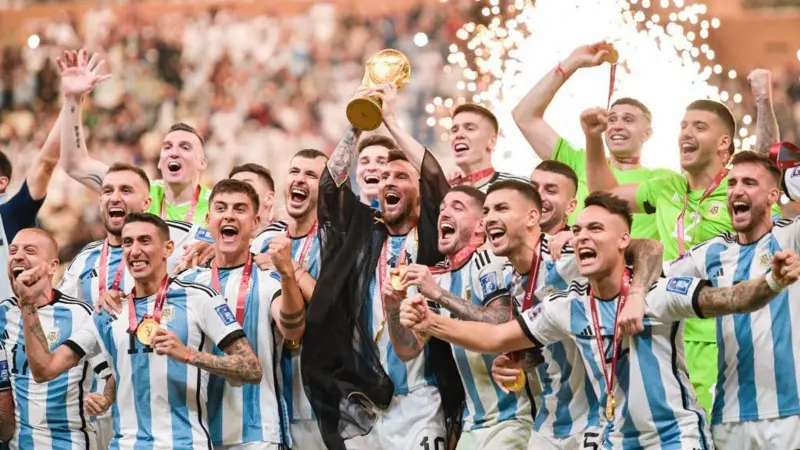
FIFA's $929 million in ticket and hospitality revenue from the 2022 Qatar World Cup might seem like a windfall for the host cities, stadium owners, teams, and players, but that's not necessarily the case. Unlike the 1994 USA World Cup, the host cities didn't benefit from the increased ticket revenue this time. Stadiums were rented out at fixed prices, with revenue predetermined, while the cities still had to bear the costs.
In 1994, Alan Rothenberg, chairman of the organizing committee, told the BBC: "The structure was completely different and incomparable. Back then, FIFA retained international marketing and broadcasting revenue, handed over the operation of the event to the US Soccer Federation, and we had the sponsorship and ticket sales opportunities."
By 2026, some cities are attempting to recoup security and transportation costs by raising fares. For example, train tickets in New York City have increased tenfold to nearly $100, while in Boston they are $80, and parking fees range from $175 to $225.
This contrasts sharply with past instances of providing free transportation in Qatar (2022), Germany (2010), Japan (2002), and France (1998). In Japan, local volunteers even greeted fans along the way, offered food, and paid for their taxi fares late at night.
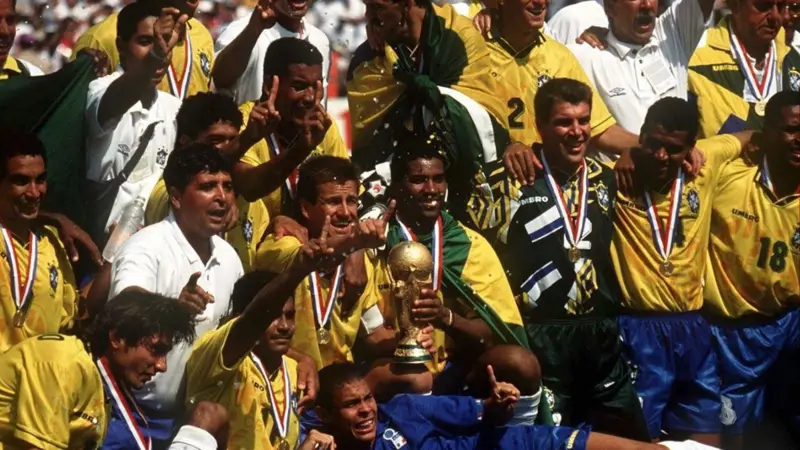
Following a reaction from Alan Rosenberg, head of the 1994 FIFA World Cup organizing committee, who stated that the financial model of the tournament was vastly different from today's, FIFA announced the release of some low-priced tickets (such as those priced at $60) through national football associations. Another new measure is the integration of the resale market into the official system—fans can resell tickets without limit, with FIFA charging a 15% commission to both buyers and sellers. A blockchain-based digital collectible ticket system has also been launched. FIFA states that this transforms scalper profits into resources for the global football community.
These billions of dollars in additional revenue have initially gone into FIFA's reserves and have been pledged to be redistributed to the global football system. FIFA noted that grassroots funding has helped Cape Verde improve its development and qualify for competition.
Funding is typically distributed equally among the 211 member associations, meaning that tiny Montserrat receives the equivalent of 2.5% of its annual GDP, or $500 per person. This "equal distribution" model has existed since the 1990s and was further strengthened after FIFA President Gianni Infantino made it a campaign promise. The system is based on the principle of "one country, one vote," a principle that has also been used this year to determine the host country for the World Cup.
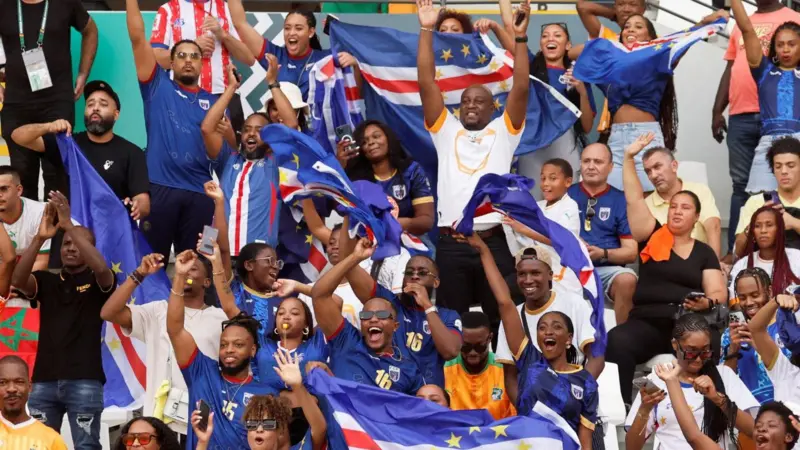
FIFA stated that investment in grassroots football would help Cape Verde qualify for the 2026 World Cup, but all of this occurred before dynamic pricing was fully implemented. It is estimated that FIFA currently earns an average of $3.9 billion annually, exceeding the World Health Organization's (WHO) budget and comparable to the United Nations' core budget.
"What you are seeing in the World Cup now is likely the first time that dynamic pricing has been applied to its highest level and most complete extent in practice... Basically, FIFA has taken over all the profits that originally belonged to the scalper market."
It remains unclear how much revenue this pricing mechanism will ultimately generate, but what is certain is that ticket sales have already created a tremendous amount of money.
In theory, this funding would be welcomed by most small countries—countries that may never qualify for the World Cup and whose fans can't afford expensive tickets, but which constitute a crucial voting bloc for FIFA elections and hosting decisions. In terms of value, this "cash cow" is currently shining brightly.
However, with the opening of the World Cup, this extreme commercialization also comes with risks.
Will the stadium be full? Will there really be a large number of fans from 48 countries creating an atmosphere that would satisfy even Jock Stan? Will FIFA repeat the mistakes of last year's Club World Cup and be forced to drastically reduce ticket prices to $11 just to fill empty seats?
The key point is that it is currently unclear whether FIFA's dynamic pricing model prioritizes maximizing revenue or ensuring that tickets sell out.
At an economic forum last month, Vantino stated, "We must adopt market prices," and football must also adapt to this "very special market." However, allowing unlimited resale prices and the numerous demand-driven price hikes are clearly intentional.
A starkly different model, exemplified by the European model represented by Paris Saint-Germain (PSG), the reigning European champions, involves offering relatively inexpensive season tickets at the back and corners of the goal, with higher corporate pricing for seats closer to the center line. The rationale is that corporate clients are willing to pay a premium not only for the game itself, but also for the opportunity to experience the powerful atmosphere and energy created by the "die-hard fan zone" behind the goal. The risk with this World Cup is that all of this may be lost.
There are already some signs that the World Cup pricing model is facing a rebound. For some lower-demand events, resale prices have declined – two tickets with a face value of $620 (approximately £471) can even be purchased for £171 on FIFA's official resale platform, a 64% discount.
Sorry, we can't display this part of the story on this lightweight mobile page.
View the full version of the page to see all the content.
The $98 train ticket in New Jersey also sold poorly. Authorities in New York, New Jersey, California, and the European Union have begun investigating the controversy surrounding the ticketing strategy. New Jersey Attorney General Jennifer Davenport described it as a "chaotic farce, a deliberate attempt to create a false sense of scarcity, and outrageously high prices." It remains unclear whether local governments have jurisdiction over the Swiss-based "non-profit organization." FIFA declined to comment.
The question is whether FIFA has pushed this pricing experiment to a tipping point. It's foreseeable that fans in Spain, Portugal, and Morocco, the host countries of the 2030 World Cup, may not accept such exorbitant ticket prices. The UK and Ireland, in preparing for the 2028 European Championship, have also indicated they will not adopt a similar model. More importantly, the development of artificial intelligence may make the next wave of pricing innovation a reality—namely, "personalized ticketing" tailored to individual data.
Some Premier League teams have already begun experimenting with dynamic pricing for certain seats to boost revenue. This practice conflicts with the traditional model of paying loyal fans a fixed price for season tickets. If FIFA's experiment is deemed successful, it could further encourage many European club owners with NFL backgrounds to try similar pricing strategies, especially when raising funds to build new stadiums.
The "K-shaped economy," a business model originating from the NFL in the United States, is now being applied to a global sporting event. The so-called "K-shaped economy" in the US—referring to the phenomenon, according to Moody's analysis, where the wealthiest 10% of the population drives up to half of consumer spending, while other income groups experience stagnation or even contraction—may be playing out on the field. Dynamic pricing, a mechanism designed to target this high-end consumer group, transforms what was originally a mass-market experience for ordinary office workers into a service for a niche market supported by technological prosperity.
For many host countries, the broader expectation remains a return to tradition, hoping the event will bring a "joyful effect," boosting consumer confidence and investment. Research shows that this effect does exist, especially when the host country performs exceptionally well.
Conversely, the stock market is often negatively impacted when a team is eliminated. Looking at the latest US employment data, tens of thousands of new jobs related to the World Cup have indeed emerged, particularly concentrated in the food service and hospitality industries.
However, given the sheer size of the US economy and the surge in AI investment, the economic stimulus effect remains relatively limited. In a place like San Francisco, which is building a wave of multi-trillion-dollar AI companies, the Jordan vs. Algeria match clearly won't attract much attention.
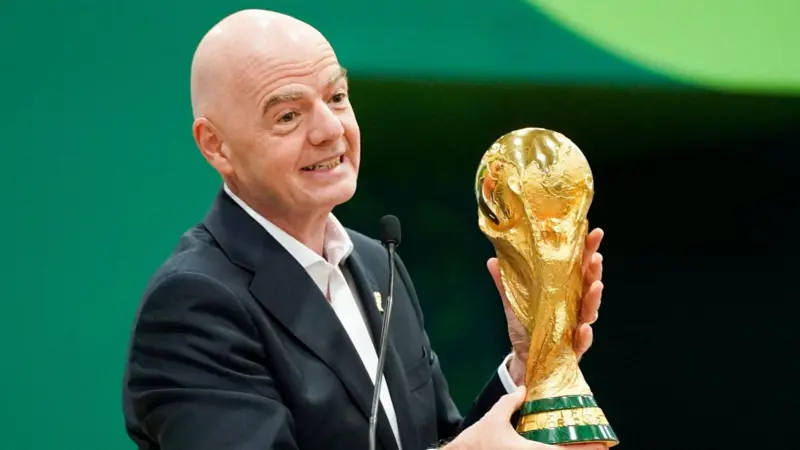
Some economists point out that World Cup ticket prices reflect the widening gap between high-income and low-income consumers in the United States.
Chicago Mayor Rahm Emanuel, who withdrew from the race to host the World Cup, seems to believe his decision was correct. Almost all ticket revenue went to FIFA, and some host cities even reported complaints about lower-than-expected hotel bookings. If it weren't for the World Cup, many stadiums might have already been filled with rock concerts.
On the surface, since this year's tournament primarily utilizes existing venues and the majority of the increased ticket revenue goes to FIFA, the direct impact of the World Cup on the US economy may be relatively limited. The potential benefits mainly lie in boosting consumer confidence.
In the UK, a strong performance from England and Scotland could provide a much-needed boost to the country’s long-standing political and economic slump; retailers and restaurants are also preparing for a potential business boom.
Market research firm Kantar estimates that supermarkets saw an additional 13 million foot traffic during the 2018 FIFA World Cup in Russia. However, another possibility is that late-night matches could actually hinder British productivity. Scotland has announced a public holiday next Monday to cover the 2 a.m. match against Haiti.
For many, the World Cup will be a temporary escape from the relentless bombardment of news, even though the various uncertainties surrounding the Trump administration may bring about broader economic impacts.
This is a completely different era of global economic development, and it has shaped the backdrop for this football extravaganza. FIFA is conducting a far-reaching and controversial pricing experiment that could transform the entire industry. Meanwhile, this extraordinary World Cup may also offer some respite from our current chaotic world order. It's a feeling of both hope and restraint—a sentiment all too familiar to fans in England or Scotland.